Corporate Brand Identity Guide: Strategies for 2026 Success

Hi, I'm James
I help startups turn confusing websites into conversion-ready ones in under 30 days.
100+ projects delivered
Worked with funded startups
Framer + UX specialist
7-Minute Website Fix Guide
Instant, high-impact fixes to improve clarity, trust, and conversions on your website.
Advanced Website Audit ($995)
A professional teardown of your current website with a prioritized action plan.
View Our Services
Fast, high-quality Framer builds or Product Design to help startups ship and scale confidently.
Design Resources
Premium components, frameworks, and overrides for faster, better builds.
Unlock corporate brand identity success in 2026 with expert strategies to boost valuation, visual equity, and operational speed. Transform your brand into an asset.
In 2026, the most overlooked driver for enterprise valuation is corporate brand identity. Visual equity, capital efficiency, and operational speed are no longer optional—they are the foundation for market leadership.
This guide delivers actionable strategies to architect a high-performance corporate brand identity. You will learn how to turn design into an asset class, not an expense.
Here’s what you’ll discover:
The strategic building blocks of corporate identity
Core visual and behavioral branding elements
A step-by-step roadmap for 2026 implementation
How design drives ROI and competitive differentiation
AIDA:
Attention: Valuation is visual. If your brand looks generic, you’re bleeding market trust.
Interest: Top brands use design as a growth multiplier, not a cost center.
Desire: Learn how to architect a corporate identity that accelerates revenue and investor confidence.
Action: Apply these 2026 strategies to transform your brand into a financial asset.
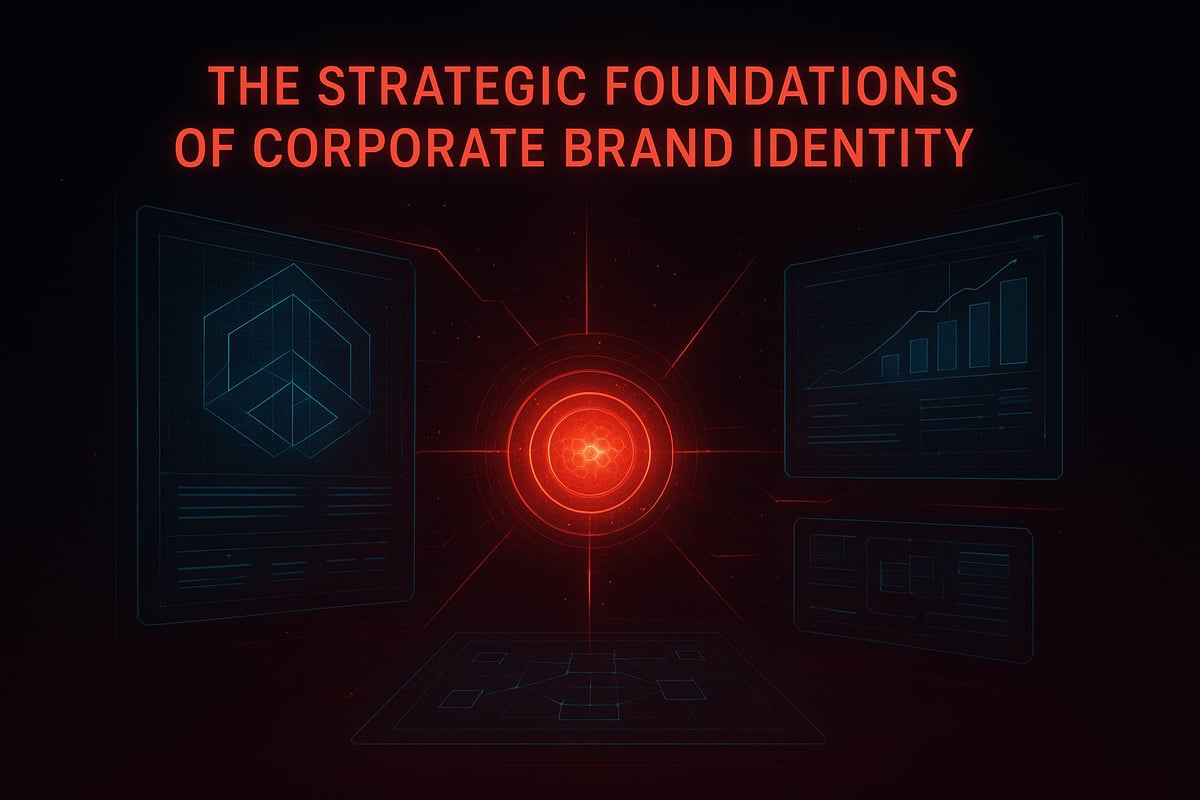
The Strategic Foundations of Corporate Brand Identity
Design is a capital asset. For Series B founders and enterprise marketing leaders, the right corporate brand identity is the difference between market leadership and lost valuation. If your brand looks generic, you are not just losing trust, you are bleeding potential capital.
Defining Corporate Brand Identity in 2026
Corporate brand identity is not product branding. It is the system that defines your company’s visual design, communication style, internal culture, and customer experience. The best leaders treat it as a financial lever, not a marketing campaign.
89% of B2B leaders say brand consistency directly impacts trust (MarcomCentral).
Companies that invest in corporate brand identity see measurable improvements in capital efficiency and operational speed.
Internal alignment, visual clarity, and behavioral consistency are critical.
For a deep dive into how to architect a powerful foundational presence, see Building a Powerful Branding Presence.
Why Visual Equity Drives Market Position
Visual equity is the sum of every branded asset—logo, color, typography, and digital presence. In 2026, visuals equal trust. A weak or templated look signals low value and erodes investor confidence.
Apple and Starbucks maintain premium pricing through high-fidelity, consistent visuals.
Data: 93% of consumers consider visual appearance a key factor in purchase decisions (Amra & Elma).
Poor design correlates with lower perceived valuation and commoditization.
High-velocity infrastructure, with AI visuals and Framer, delivers visual equity at scale—weeks, not months.
The Role of Internal Alignment and Brand Orientation
A high-performance corporate brand identity is a centripetal force. It guides company philosophy, culture, and every behavior. Internal brand orientation aligns teams, accelerates go-to-market, and drives measurable outcomes.
Enterprises with strong brand orientation outperform on employee engagement and retention.
Shared values and behaviors foster operational speed and market trust.
Brand orientation is not optional for Series B and enterprise teams aiming for leadership.
Treat corporate brand identity as infrastructure. This is how you build trust, win capital, and sustain market position.
Core Elements of a High-Performance Corporate Identity
Design is no longer a cost center. For enterprise VPs of Marketing and Series B founders, treating design as an asset class is non-negotiable. The core elements of a high-performance corporate brand identity are visual, verbal, and behavioral. Each is a strategic lever for capital efficiency and market leadership.
Visual Identity: The Language of Recognition
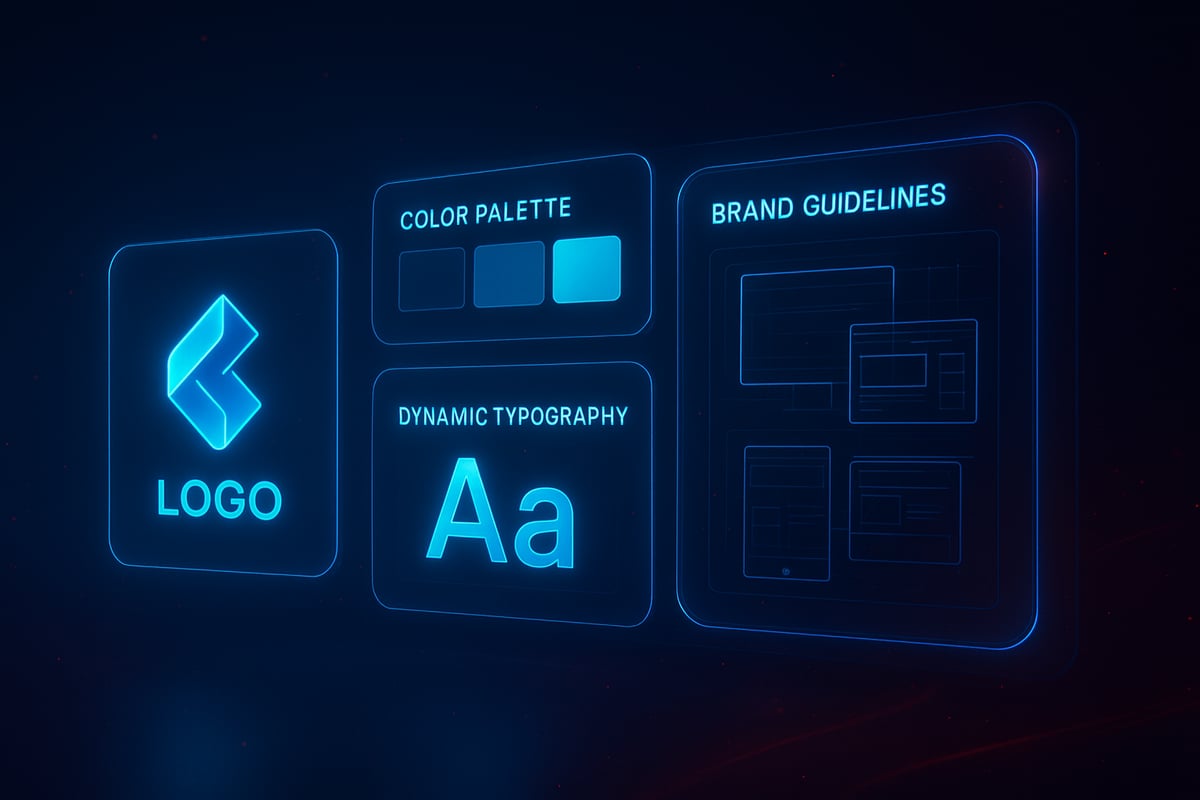
Visual identity is the foundation of corporate brand identity. Strategic logo design, bold color palettes, and custom typography build instant recognition across every touchpoint. Digital-first assets, like motion-enabled visuals and responsive layouts, are now table stakes.
Simplicity and memorability drive recall and trust.
Scalable design ensures seamless performance across devices and platforms.
Consistency multiplies revenue and visual equity.
According to Visual branding's impact on revenue, companies with consistent visual identity increase revenue by up to 23 percent. SaaS brands leveraging unified standards become recognizable, premium, and defensible in crowded markets.
Brand Voice and Messaging Architecture
A high-performance corporate brand identity requires a distinctive voice. Tone must be authoritative and trustworthy, yet differentiated from competitors. Messaging pillars—clarity, consistency, and market relevance—form the backbone of every communication.
Copy standards and approval workflows reduce risk and boost operational speed.
Governance frameworks ensure every asset aligns with core values.
Financial services brands excel with compliance-driven messaging, building trust in regulated environments.
By codifying messaging architecture, enterprises drive capital efficiency while maintaining agility. The result is a brand that speaks with one voice, everywhere it matters.
Behavioral Identity: Living the Brand
Behavioral identity is how a corporate brand identity comes to life. Values, mission statements, and ethical codes are not just words—they shape culture and decision-making from the boardroom to customer support.
Corporate social responsibility differentiates leaders from followers.
Every employee interaction is a brand signal, influencing perception and retention.
Harvard Business Review reports 64 percent of consumers cite shared values as the main reason for brand loyalty.
Enterprises that operationalize behavioral identity achieve higher employee engagement and customer trust. When every action embodies the brand promise, differentiation becomes sustainable.
Step-by-Step Guide: Implementing a Winning Brand Identity for 2026
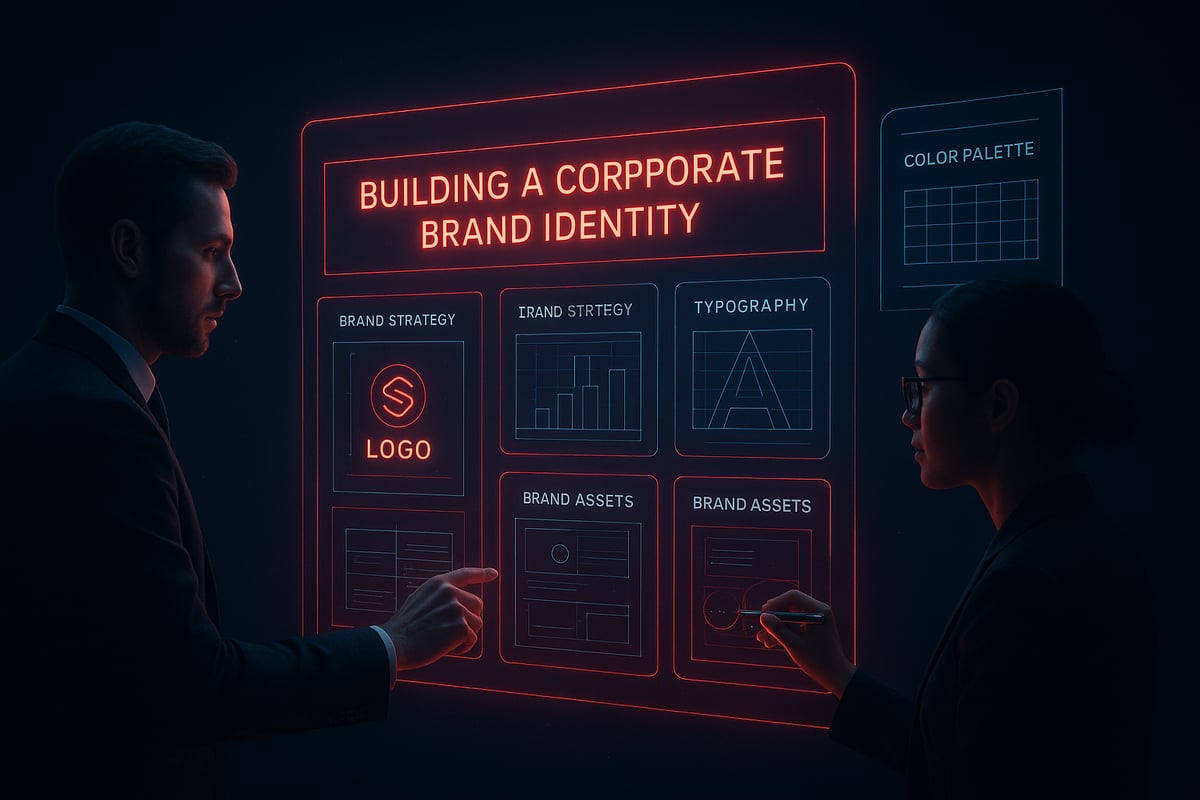
Building a high-performance corporate brand identity is a disciplined, strategic process. Each step accelerates capital efficiency, strengthens visual equity, and positions your company for market leadership. Here is a proven, step-by-step framework for transforming your brand into a financial lever.
Step 1: Executive Alignment and Stakeholder Buy-In
Capital efficiency starts at the top. Without C-suite sponsorship, any corporate brand identity initiative is dead on arrival.
Secure executive buy-in with focused workshops that clarify vision, values, and market aspirations. Align every branding move with core business KPIs such as revenue growth, retention, and NPS. When leadership is engaged, brand identity shifts from an expense to a strategic asset.
C-suite sets priorities, not marketing alone
Vision and values drive every decision
Brand KPIs are tracked alongside financials
A recalibrated corporate brand identity, championed by leadership, drives valuation and market position.
Step 2: Brand Audit and Competitive Benchmarking
A rigorous audit is non-negotiable for any corporate brand identity overhaul. Inventory every asset—visuals, messaging, behaviors—across all touchpoints.
Benchmark against top industry players and disruptive newcomers. Identify where your brand loses trust, appears generic, or lacks differentiation. Use AI-powered audits and digital asset management platforms to surface gaps that erode visual equity.
List every brand asset and assess for consistency
Compare against market leaders and digital-first disruptors
Pinpoint weaknesses that hurt trust and capital efficiency
A comprehensive audit ensures your corporate brand identity stands out and commands market trust.
Step 3: Design System Development and Asset Creation
Speed and scalability define modern brand building. Develop a robust design system—components, patterns, templates—that powers every channel.
Invest in AI-generated visuals for rapid, unique asset creation. Use Framer and high-velocity infrastructure for real-time iteration. Consistency equals trust, driving capital efficiency at scale. For a deeper dive, see Essential Design Systems for Brands.
Design systems prevent costly fragmentation
Rapid prototyping accelerates time-to-market
AI visuals ensure premium, investor-grade quality
This step cements your corporate brand identity as an operational asset, not a static style guide.
Step 4: Internal Rollout and Training
Internal alignment is the fuel for adoption. Launch the new corporate brand identity with playbooks, training sessions, and incentives.
Empower every team to become brand ambassadors. Use Slack-native tools and feedback loops to monitor adoption and resolve friction fast. High engagement reduces costly missteps and ensures brand values are lived, not just stated.
Rollout kits simplify onboarding
Training embeds values and behaviors
Feedback drives continuous improvement
A fully activated internal culture amplifies your corporate brand identity in every market interaction.
Step 5: External Launch and Market Activation
Operational speed is a differentiator. Orchestrate a coordinated rollout across web, product, sales, and investor materials. Use PR, social, and targeted paid campaigns to signal your new identity to the market.
Track results in real time: monitor brand sentiment, conversion rates, and investor response. Agile measurement turns your corporate brand identity into a dynamic growth lever, optimizing both market position and valuation.
Synchronized launch maximizes impact
Data-driven iteration sharpens positioning
Investor-grade visuals increase trust and capital efficiency
A premium website redesign is not just a facelift—it is a direct investment in enterprise valuation.
Design as a Financial Lever: ROI, Valuation, and Capital Efficiency
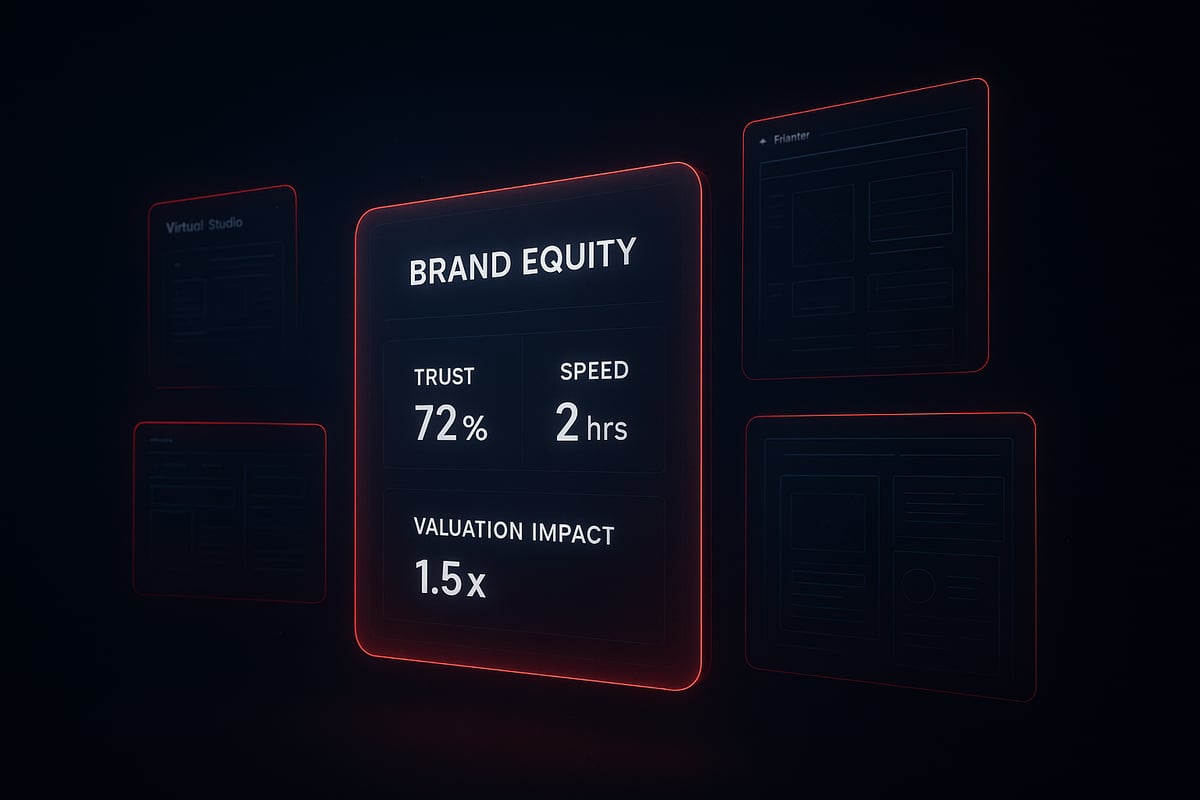
A high-performance corporate brand identity is not just a marketing tool—it is a capital asset that drives measurable gains in ROI, valuation, and operational speed. Treating design as an expense is a strategic misstep. The new standard repositions design as a lever for capital efficiency and market leadership.
The Economics of Visual Equity
Visual equity is the sum value of all branded assets—logo, color, typography, and digital presence. For enterprise leaders, this translates into tangible financial advantages:
Brands with strong visual identity command up to 20% higher market valuations (Forbes).
93% of consumers cite visual appearance as a key factor in purchase decisions, highlighting the link between perception and conversion. See visual appearance in consumer decisions.
Premium design signals trust to investors, accelerates fundraising, and improves customer lifetime value.
A corporate brand identity built for visual equity directly impacts your company’s ability to raise capital, outmaneuver competitors, and sustain premium pricing.
Operational Speed Through High-Velocity Infrastructure
Traditional agencies operate on outdated timelines—three months to launch a new site is unacceptable when speed is a market advantage. Virtual studios, AI-generated visuals, and Framer-based infrastructure deliver high-velocity results:
Website launches reduced from 12 weeks to 2 weeks.
Async workflows cut bottlenecks, enabling global teams to collaborate without delay.
Rapid iteration means your corporate brand identity evolves in step with market shifts.
By investing in scalable, digital-first design systems, you unlock operational speed and capital efficiency. For actionable strategies, explore Creating Distinct Brand Identity Online.
Why Premium Design Outperforms “Templates”
Template-based branding commoditizes your company and signals low value to both investors and enterprise buyers. The difference is clear:
Approach | Time to Launch | Perceived Value | Conversion Impact |
|---|---|---|---|
Templates | 2-3 weeks | Low | Flat or negative |
Premium Custom | 2 weeks | High | +30% post-rebrand |
Custom, high-fidelity design elevates your corporate brand identity above generic competitors. SaaS brands that invest in bespoke systems have recorded conversion rate lifts of 30% or more post-rebrand. When your brand looks investor-grade, your valuation follows.
Sustaining and Scaling Brand Identity in Competitive Markets
Sustaining a high-performance corporate brand identity requires more than a one-time launch. Market leaders treat brand as infrastructure, prioritizing continuous optimization, operational speed, and data-driven decision making. The right systems and processes transform brand design from a marketing expense into a financial asset.
Governance: Brand Management Systems and Compliance
Effective corporate brand identity management starts with centralized brand portals. These systems ensure every asset—logo, color, typography, motion graphic—is accessible, compliant, and up to date. Automated compliance checks are critical for regulated industries, eliminating risk and costly delays.
Usage analytics reveal which assets drive engagement and which need refinement. For enterprises, dynamic asset control means no more outdated decks or rogue visuals. Smart governance supports capital efficiency by streamlining workflows and reducing time to market.
72 percent of businesses prioritize brand consistency to improve customer loyalty, according to brand consistency and customer trust.
Centralized systems protect visual equity across every touchpoint.
A premium governance infrastructure transforms brand management from a bottleneck into a growth engine.
Continuous Evolution: Adapting to Market Shifts
Corporate brand identity is not static. Annual brand health audits and market perception studies are essential to identify gaps and opportunities. Agile updates keep brands relevant without sacrificing consistency.
Empower teams with dynamic templates and on-demand creative resources. This ensures rapid adaptation to new trends, competitor moves, or regulatory changes. Virtual studios enable high-velocity rollouts, launching new visuals in weeks instead of months.
Annual audits drive continuous improvement.
Dynamic templates enable operational speed at scale.
On-demand creative support reduces friction, maximizing capital efficiency.
Continuous evolution is the antidote to stagnation. Treat your corporate brand identity as a living system, always ready to respond to market demands.
Measuring Brand Performance and Market Impact
Quantifying the impact of your corporate brand identity is non-negotiable. Track KPIs like brand equity score, NPS, conversion rates, and employee advocacy. Leverage analytics to link brand initiatives directly to business outcomes.
Table: Key Brand Performance Metrics
Metric | Business Outcome |
|---|---|
Brand Equity Score | Market Position, Valuation |
Conversion Rates | Revenue, LTV |
Employee Advocacy | Talent Retention, Culture |
NPS | Customer Loyalty, Growth |
Forward-thinking enterprises use brand data to inform product strategy and go-to-market execution. As the visual design market continues to expand, visual design market growth projections reinforce that investing in premium design is now a core lever for value creation.
A high-velocity, data-driven approach to corporate brand identity will keep your organization ahead of commoditized competitors and drive sustained market leadership.
As you look ahead to 2026, your corporate brand identity isn’t just about looking good—it’s the engine that drives trust, investor confidence, and real business growth. We’ve unpacked the strategies that top startups use to scale fast: design systems that build visual equity, clear messaging, and operational speed that outpaces the competition. If you’re serious about turning your brand into a financial asset, why not take the first step? Let’s explore your goals and see how Embark Studio™ can help you launch a high-performance brand, fast.

Blog / Newsletter