Corporate Website Redesign Guide: Strategies for 2026 Success

Hi, I'm James
I help startups turn confusing websites into conversion-ready ones in under 30 days.
100+ projects delivered
Worked with funded startups
Framer + UX specialist
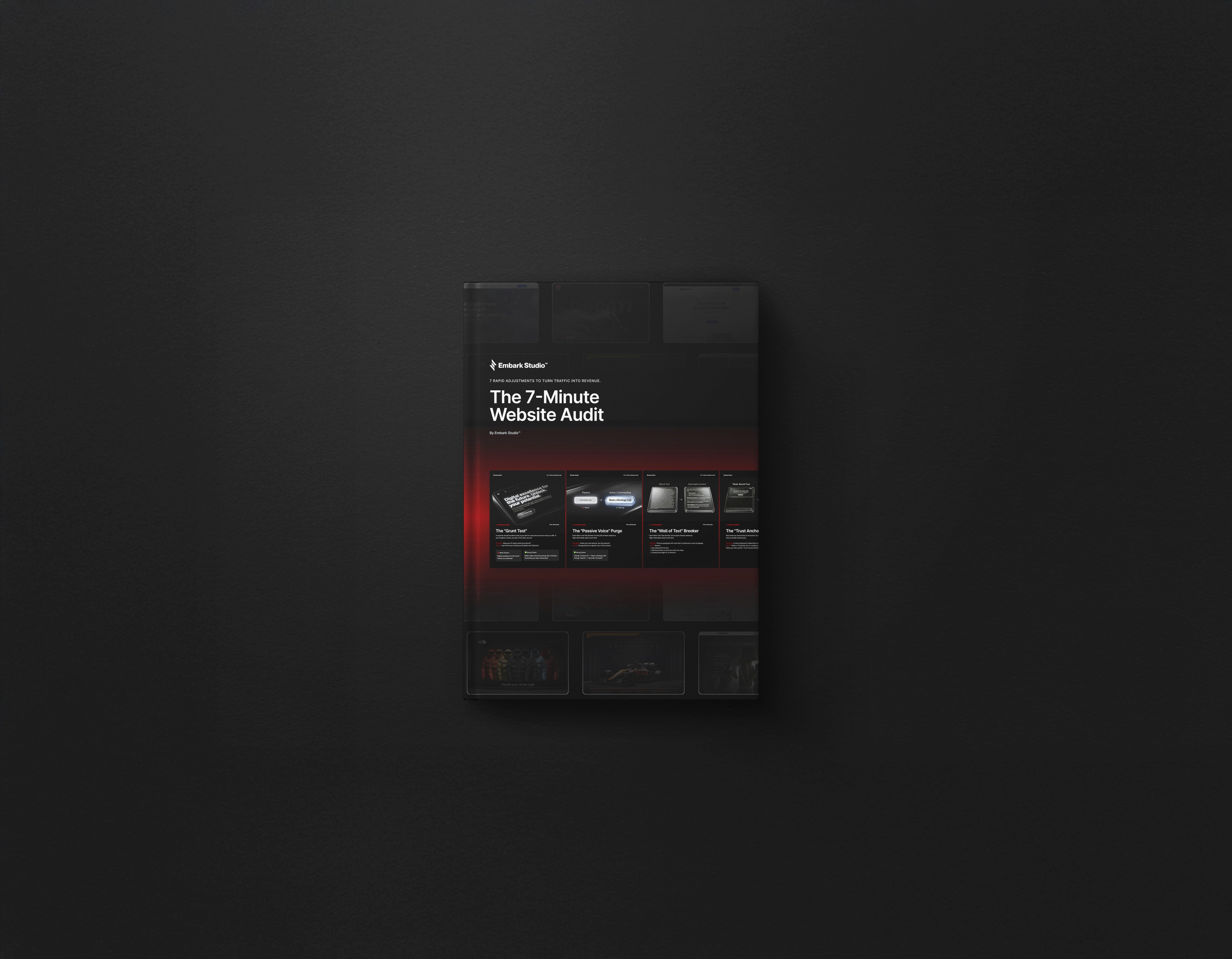
7-Minute Website Fix Guide
Instant, high-impact fixes to improve clarity, trust, and conversions on your website.
Advanced Website Audit ($995)
A professional teardown of your current website with a prioritized action plan.
View Our Services
Fast, high-quality Framer builds or Product Design to help startups ship and scale confidently.
Design Resources
Premium components, frameworks, and overrides for faster, better builds.
Unlock 2026 corporate website redesign success with proven strategies for stakeholder alignment, AI workflows, and scalable design systems that drive results
Did you know most corporate website redesign projects fail to move the needle for business growth? The culprit is rarely the technology, but rather outdated approaches and misaligned goals.
In 2026, the stakes are higher than ever. A successful corporate website redesign demands more than a fresh look. It calls for a psychology-driven system built on clarity, rhythm, and measurable conversion.
This guide unpacks a proven process for strategic planning, aligning stakeholders, designing for users, leveraging AI, and building systems that scale as your brand does.
Ready to rethink how your corporate website redesign delivers real impact? Let’s dive into the future of strategic, scalable design—crafted for results, not just aesthetics.
Step 1: Strategic Discovery & Stakeholder Alignment
Why Most Redesigns Fail: Misconceptions and Missed Goals
Most teams start a corporate website redesign believing fresh visuals will drive results. The real problem is not tools—it is a lack of strategic clarity. According to industry research, 70-80% of redesigns underperform, often due to internal misalignment.
What is the root cause? Teams focus on aesthetics, not business outcomes. Trust and credibility start inside the organization, with everyone clear on purpose and goals.
Pitfall | Impact |
|---|---|
Visual-first thinking | Missed business targets |
Siloed teams | Confused messaging |
Unclear navigation | User drop-off |
A successful corporate website redesign begins with aligning strategy, not just updating screens.
Mapping Business Objectives to Website Goals
A future-ready corporate website redesign connects business objectives directly to measurable website outcomes. Start by defining clear KPIs: conversion rate, lead quality, and retention. For example, a B2B SaaS provider saw demo requests surge after aligning messaging and CTAs across the site.
Gather input from marketing, sales, and product.
Translate business metrics into actionable website goals.
Prioritize KPIs that impact growth.
This clarity ensures every design decision supports business impact. AI can help by analyzing historic data to predict which KPIs matter most, but human insight sets the vision. The goal is a corporate website redesign that delivers tangible value, not just surface-level change.
Stakeholder Workshops: Process and Outcomes
Bringing stakeholders together is critical for a successful corporate website redesign. Structured workshops surface priorities, uncover pain points, and create alignment. Use the Jobs-to-be-done framework and empathy mapping to understand what matters most to each team.
Map out roles and responsibilities.
Facilitate open discussion to reveal hidden challenges.
Document a consensus-driven roadmap.
Workshops transform scattered opinions into one shared vision. Rapid prototyping, guided by stakeholder input, accelerates buy-in and reduces costly missteps. Studio thinking means building systems that evolve with your business, not just one-off screens.
Competitive Audit and Industry Benchmarking
To future-proof a corporate website redesign, benchmark against top industry performers. Analyze navigation structures, trust signals, and content depth. For instance, Fortune 500 sites often use focused navigation to boost clarity—40% of users leave when navigation is unclear.
Identify direct competitors.
Audit their site architecture and user flows.
Extract actionable insights for your redesign.
AI tools can reveal hidden user patterns and suggest optimizations, but human intuition ensures your site stands out. Every insight feeds into a system that prioritizes clarity, rhythm, and conversion. Leverage proprietary frameworks to guide your discovery and align every stakeholder from day one.
Step 2: Deep User Research & Journey Mapping
Understanding the real needs of your users is the foundation of a successful corporate website redesign. Too often, teams chase trends or surface-level data, missing the deeper motivations that drive engagement and loyalty.
Understanding User Psychology in 2026
Most teams assume user behavior is static, but in 2026, B2B and B2C buyer expectations are evolving rapidly. Decision-makers now expect instant trust signals, authority, and seamless micro-interactions at every step.
A single overlooked detail, like the placement of a trust badge or a subtle animation on a button, can tip the balance between a completed form and an abandoned session. For a corporate website redesign to succeed, every UI element must be intentional, reducing uncertainty and building credibility from the first click.
The psychology of user trust relies on clarity and rhythm throughout the experience. When users feel understood, engagement rates climb, and conversion becomes a natural outcome.
Advanced Persona Development
Static personas are no longer enough. Modern corporate website redesign projects require dynamic, data-driven personas that capture intent and motivation, not just demographics.
By analyzing behavioral data, design teams can identify what truly matters to each segment. AI now plays a key role, uncovering hidden patterns and surfacing actionable insights faster than ever. For example, using AI to cluster user behavior can reveal new segments missed by manual research. Learn more about how AI in website design and conversion is transforming persona development and segmentation.
This approach ensures that every design decision is rooted in real user needs, not assumptions, powering the next generation of high-performing corporate sites.
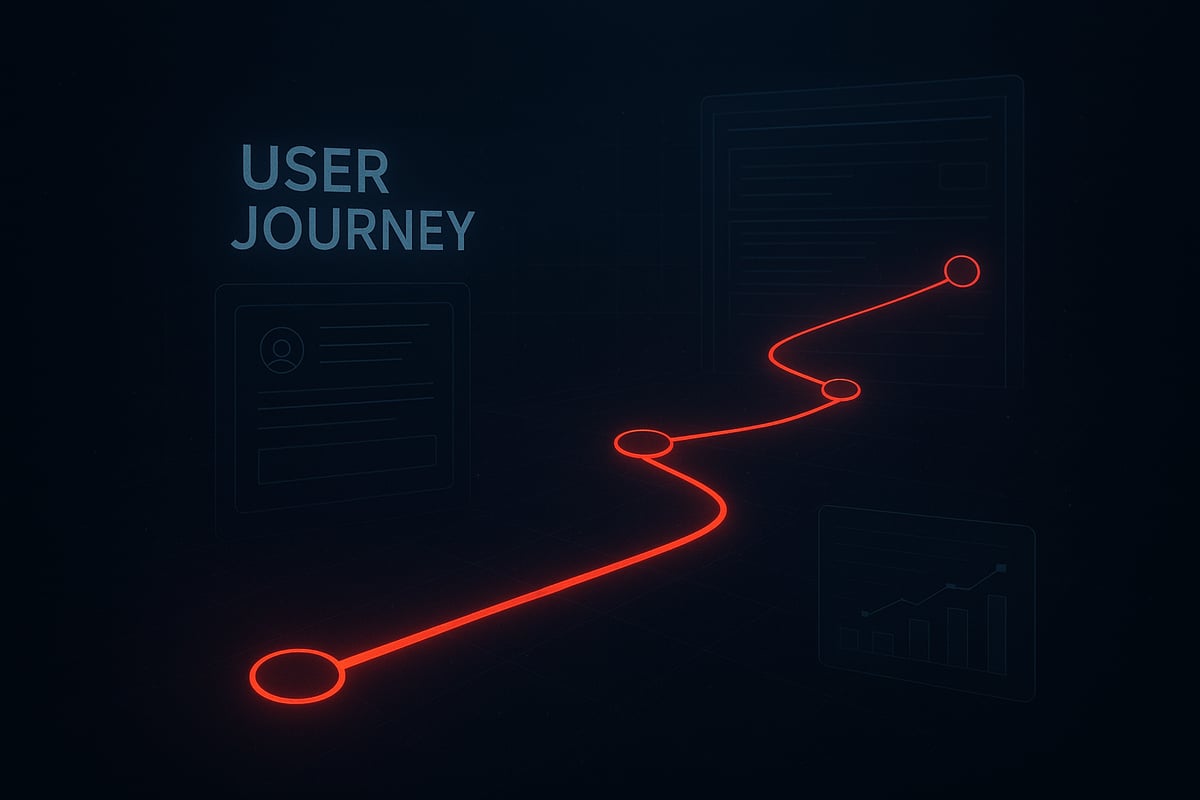
Mapping the End-to-End User Journey
A corporate website redesign must map the entire user journey, from initial awareness to post-conversion delight. Start by identifying friction points—where users drop off or hesitate—and moments of delight that encourage progress.
For example, optimizing a SaaS onboarding flow can turn a confusing maze into a guided path, increasing activation rates. The goal is clarity, not complexity. Studio thinking means designing not just screens, but systems that support user intent at every stage.
When teams visualize the journey as a connected system, they can prioritize improvements that move the needle on business outcomes.
User Testing and Validation Loops
Continuous user testing is essential for any corporate website redesign. Use rapid prototypes to gather feedback in real time, validating assumptions before investing in full builds.
Quantitative tests reveal trends, while qualitative sessions uncover the why behind user actions. Iterative testing reduces redesign costs by 30 percent, according to McKinsey, and ensures your site evolves with actual user needs.
Building feedback loops into your process creates a culture of learning and adaptability. Ready to go deeper? Explore Embark Studio™’s user research toolkit for advanced methods tailored to your team.
Step 3: Systems-Driven Design & Content Architecture
Designing for a corporate website redesign is more than a facelift. The misconception? Many teams obsess over surface visuals, missing the deeper architecture that drives real business outcomes.
The reality: Lasting impact comes from systems thinking, not just pretty screens. Let’s break down the essential pillars—rhythm, clarity, and depth—and see how they transform not just the look, but the performance of your corporate website redesign.
Design Principles: Rhythm, Clarity, and Depth
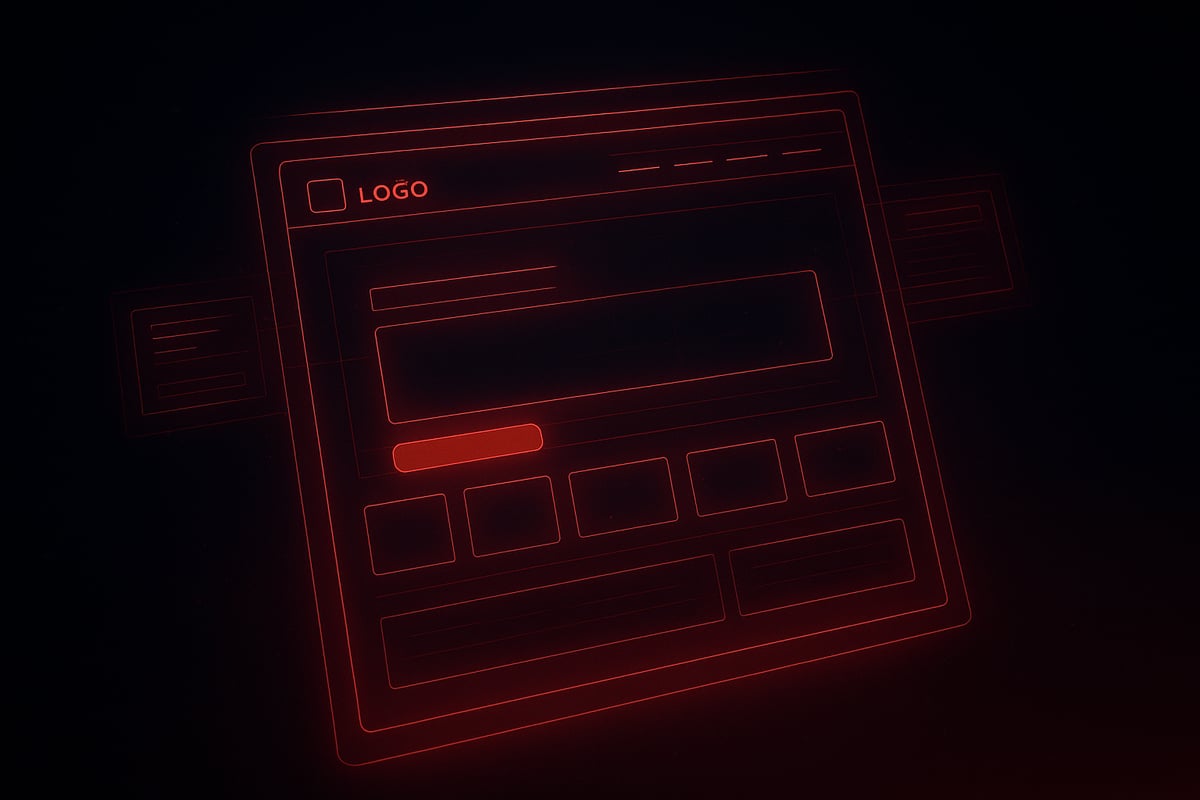
Why do so many corporate website redesign projects fall short? The answer often lies in ignoring the psychology of rhythm and clarity. When rhythm is built into UI—consistent spacing, repetition, and predictable patterns—users feel anchored and confident.
Consider a real scenario: Before adopting a grid system, an enterprise site’s pages felt scattered and inconsistent. After introducing a 12-column grid, every element aligned, creating both order and trust.
Before Grid System | After Grid System |
|---|---|
Uneven spacing | Consistent rhythm |
Confusing layout | Clear hierarchy |
Distracted users | Focused attention |
Establishing rhythm and clarity in a corporate website redesign reduces cognitive load, making complex information feel simple. Aim for depth, not density—layer visual cues to guide, not overwhelm.
Building a Scalable Design System
A scalable design system is the backbone of any successful corporate website redesign. Instead of designing isolated screens, create modular components—buttons, cards, navigation—that can be reused across the site. This modularity accelerates enterprise rollouts and ensures visual consistency.
Take, for example, atomic design principles: start with atoms (basic elements), combine them into molecules (components), and build up to full templates. This system lets teams iterate rapidly and maintain quality at scale.
For a deep dive into this approach, see the Systems in design for 2025 guide, which explores how modular systems future-proof your corporate website redesign.
Studio thinking: focus on building a living system, not just a set of screens.
Content Strategy for 2026: Authority and Authenticity
Content is the trust engine of a corporate website redesign. In 2026, authority and authenticity matter more than ever. Structure your content for credibility—use long-form case studies, expert insights, and transparent data.
Real UI scenario: Instead of burying case studies in PDFs, transform them into interactive, conversion-focused assets. This boosts SEO and increases dwell time by up to 45 percent.
To build authority, map content to user intent. Use tables to summarize insights, and highlight key metrics in context. Every word and visual should reinforce your brand’s expertise and reliability.
Information Architecture: Clarity Over Complexity
Great information architecture is invisible—it guides users without distraction. Map your site’s structure directly to user goals, not internal silos.
Consider the choice: a mega-menu may showcase everything, but a focused navigation drives engagement. Data shows 40 percent of users abandon sites with unclear navigation. Use AI to analyze behavioral data and suggest optimal structures for your corporate website redesign.
Try this sample IA outline:
Studio thinking: clarity always wins over complexity. Systems thinking turns navigation into a guided journey.
The Embark Studio™ system is built on these principles—a toolkit designed to scale, adapt, and clarify as your business grows.
Step 4: AI-Enhanced Workflows & Automation
AI is transforming how teams approach corporate website redesign. The misconception? That AI replaces creative vision. In reality, it acts as a catalyst, empowering designers to focus on clarity, rhythm, and depth while handling the heavy lifting behind the scenes.
The Role of AI in Modern Redesigns
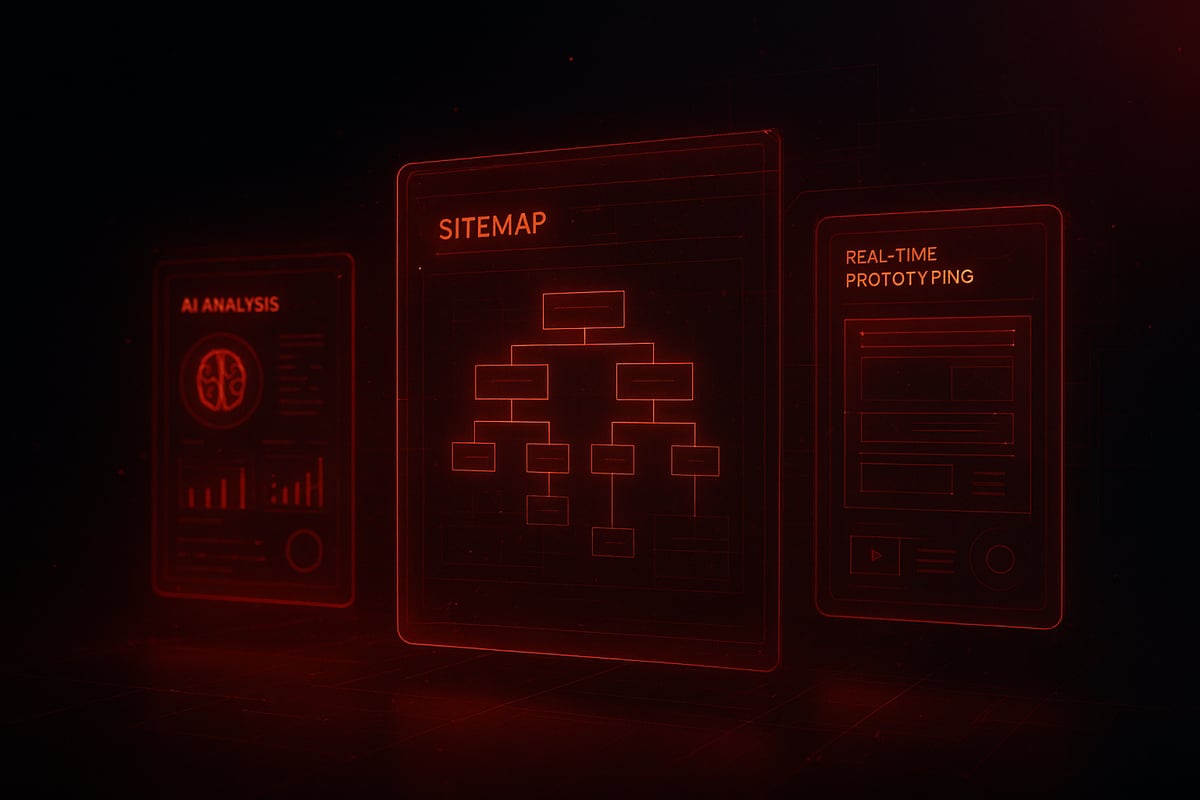
Many believe AI will automate creative decisions, but the truth is more nuanced. In corporate website redesign projects, AI excels at accelerating research, surfacing user insights, and generating rapid prototypes. For example, AI-driven heatmaps highlight user attention zones, guiding designers to optimize layouts for clarity and conversion.
To see how advanced tools can support this process, explore the Framer guide for modern web design, which illustrates how AI-powered workflows can enhance design systems without compromising vision.
Automating Repetitive Tasks for Efficiency
Efficiency is critical in any corporate website redesign. AI streamlines repetitive tasks like asset generation, versioning, and initial content recommendations. By automating these steps, teams free up time for higher-level strategy and creative thinking.
Consider a scenario where AI assists with user testing, quickly analyzing feedback and surfacing trends. This ensures design iterations are informed by data, not guesswork, making the redesign process both faster and more reliable.
AI-Assisted Personalization and A/B Testing
Personalization is no longer a luxury, it is a necessity for every corporate website redesign. AI enables dynamic content blocks that adapt to user segments in real time. Imagine a homepage that shifts its messaging based on visitor intent, or a CTA that changes based on previous interactions.
With AI-driven A/B testing, teams can rapidly test hypotheses and optimize conversion flows. This approach moves beyond static design, creating a living system that evolves with user behavior.
Ethical Considerations and Human Oversight
Trust is foundational in corporate website redesign. While AI can automate decisions, human oversight is essential to maintain brand integrity and accessibility. Designers must ensure that AI-driven changes align with ethical standards and reinforce user trust.
The best results come from a partnership between human creativity and AI support. This balance protects the user experience and upholds the values at the core of your brand.
Future-Proofing with AI: What’s Next?
Looking ahead, AI will play an even greater role in predictive analytics and proactive design improvements. Imagine systems that anticipate user needs before they arise, or frameworks that evolve in step with business goals.
At Embark Studio™, we are continuously evolving our design systems to integrate AI thoughtfully, ensuring every corporate website redesign remains future-proof and human-centered.
Step 5: Launch, Measurement & Continuous Optimization
Launching a corporate website redesign is more than flipping a switch. The true challenge lies in orchestrating a seamless rollout, capturing actionable data, and building a system of continuous improvement. Let’s break down how to transform launch day from a finish line into the first step of ongoing growth.
Preparing for a Seamless Launch
The most common misconception? That launch is the end. In reality, a successful corporate website redesign hinges on meticulous quality assurance, accessibility, and performance. Run structured QA sprints, using checklists for device compatibility, load speed, and ADA compliance. According to Google, 53 percent of users abandon sites that take longer than three seconds to load.
Accessibility is now a strategic imperative. Stay ahead of legal and ethical standards by integrating insights from Web accessibility trends for 2026. This ensures your launch is both inclusive and future-proof.
Setting Up Analytics and Conversion Tracking
A great corporate website redesign is measured by more than surface-level traffic. Define clear success metrics—conversion rate, micro-conversions, lifetime value—mapped directly to business objectives. Use real UI scenarios, such as tracking demo request clicks or gated content downloads, to connect data with outcomes.
Set up dashboards in Google Analytics or Mixpanel. Tag every key interaction. This creates a feedback loop, allowing you to pivot based on real user behavior rather than assumptions.
Post-Launch User Feedback Loops
After launch, prioritize structured feedback. In-app surveys, session recordings, and heatmaps reveal friction points and areas for delight. For example, if users abandon onboarding forms, replay their sessions to see where confusion arises.
A rapid feedback cycle ensures your corporate website redesign adapts to changing user needs. Combine quantitative insights with qualitative feedback for a holistic optimization strategy.
Iterative Optimization Cycles
Continuous improvement is not a luxury, it is a necessity. Launch A/B tests to refine messaging, layouts, and calls to action. Hypothesis-driven experiments accelerate learning and ROI.
Industry data shows that businesses adopting ongoing optimization after a corporate website redesign see annual ROI increases by 20 percent. For benchmarks and insights, consult Website redesign ROI statistics by industry. This data-driven approach transforms every iteration into measurable growth.
Scaling and Evolving the Design System
The best corporate website redesign projects are never static. Build a culture of experimentation, where systems evolve as your business grows. Document every component, pattern, and workflow. Encourage designers and developers to propose improvements, then validate ideas with real user data.
Studio thinking prioritizes scalable systems over isolated screens. This mindset keeps your brand agile and ready for the next wave of digital change. For a proven process, explore our evolving Embark Studio™ frameworks.
Step 6: Trends & Future Directions for Corporate Websites in 2026
Most teams believe a corporate website redesign is about following the latest look. The reality is, in 2026, success depends on systems that blend psychology, clarity, and future-proof frameworks. The biggest misconception? That trends are surface-level. In truth, they go much deeper—reshaping how trust, inclusivity, and sustainability are built into every layer.
1. Immersive, Narrative-Driven Experiences
Storytelling now defines the most effective corporate website redesign projects. Brands are moving beyond static pages, weaving narrative through scroll-triggered animations and interactive case studies. This approach creates rhythm and depth, making content memorable and persuasive. Want to see how these trends come alive? Explore interactive web design trends for 2026 for real-world inspiration.
2. Accessibility and Inclusivity as Strategy
Legal and ethical demands are shaping every corporate website redesign decision. With 15 percent of adults worldwide living with a disability (WHO, 2023), accessibility is not an afterthought. Inclusive design systems use clear contrasts, adaptable layouts, and screen reader-ready code. The result? Sites that reach broader audiences, boost brand reputation, and meet compliance—by design, not by accident.
3. Privacy, Security, and Trust Signals
Transparent data handling is now central to every corporate website redesign. Modern UI patterns surface trust signals at key moments—consent-driven forms, clear privacy policies, and visible security badges. These elements aren't just legal requirements, they're psychological triggers that increase conversions and user confidence.
4. Sustainable Web Design Practices
Sustainability is shifting from a nice-to-have to a business imperative. Optimized assets, eco-friendly hosting, and energy-efficient code can reduce a site’s carbon footprint by up to 50 percent (Website Carbon, 2024). The most forward-thinking redesigns build these practices into the system from day one.
Studio Thinking
Each trend points to a deeper truth: great corporate website redesign is about systems, not just screens. At Embark Studio™, we’re building frameworks that help brands stay ahead—combining clarity, rhythm, and real-world results for the next era of digital business.
Ready to turn insights into action? If you’re serious about building a corporate website that truly drives growth in 2026, it all starts with a clear strategy and the right partners. We’ve walked through the roadmap—clarity, alignment, user focus, and scalable design systems—but every business is unique. Let’s talk about your goals, your challenges, and how Embark Studio™ can help you move fast and smart. You don’t have to figure it out alone. Book a quick call and let’s see what’s possible together—no pressure, just real expertise.

Blog / Newsletter